
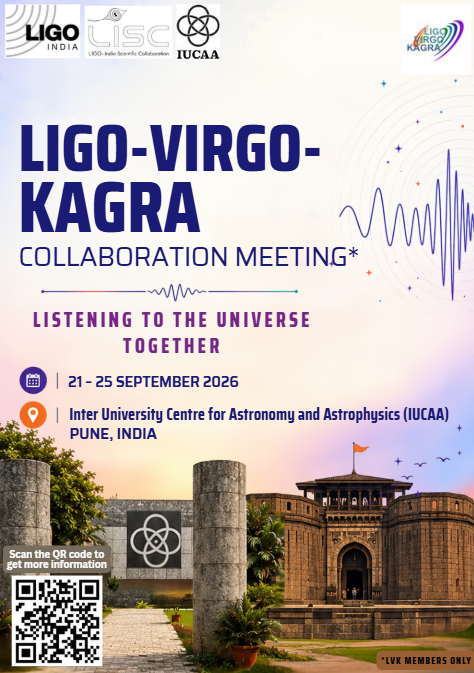
We are excited about the upcoming LIGO-Virgo-KAGRA (LVK) collaboration meeting*, the biannual gathering of gravitational wave researchers from across the globe. The meeting provides a unique opportunity to share the latest research, exchange best practices, learn about the participating countries, meet new people and have a great time doing activities together!
From 21-24 September 2026, the LVK meeting is being hosted at IUCAA in Pune, India. To help you make the most of your time during the meeting, this article highlights to look for in the local area (Pune).
*Note that this meeting is for collaboration members only. For more information about the LVK meeting in Pune, visit:
https://web.iucaa.in/ws/~lvk2026pune/
General Information for Visitors
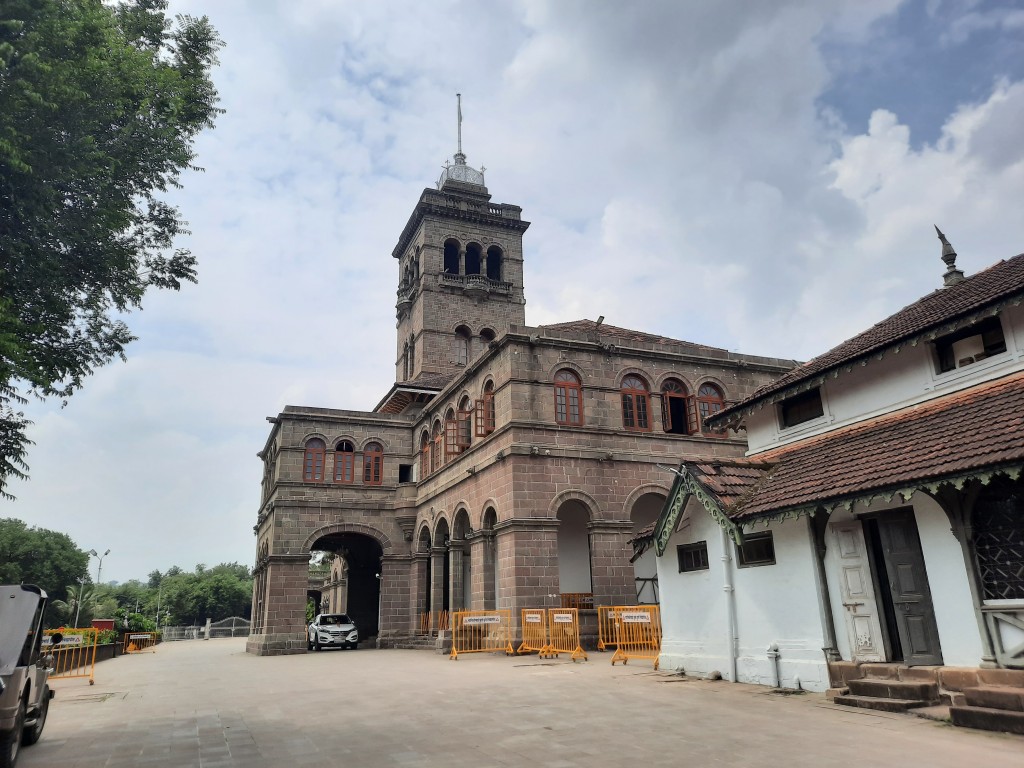
Pune is known for its historical, cultural, educational and religious importance. In this article, we will walk you through the history and the culture of Pune. By the end of the read, the reader will hopefully understand what it means to be a Punekar. The article will also take you through feminist educational reforms that shaped Modern India.
Credits: Debarati Chatterjee
History of Education in Pune
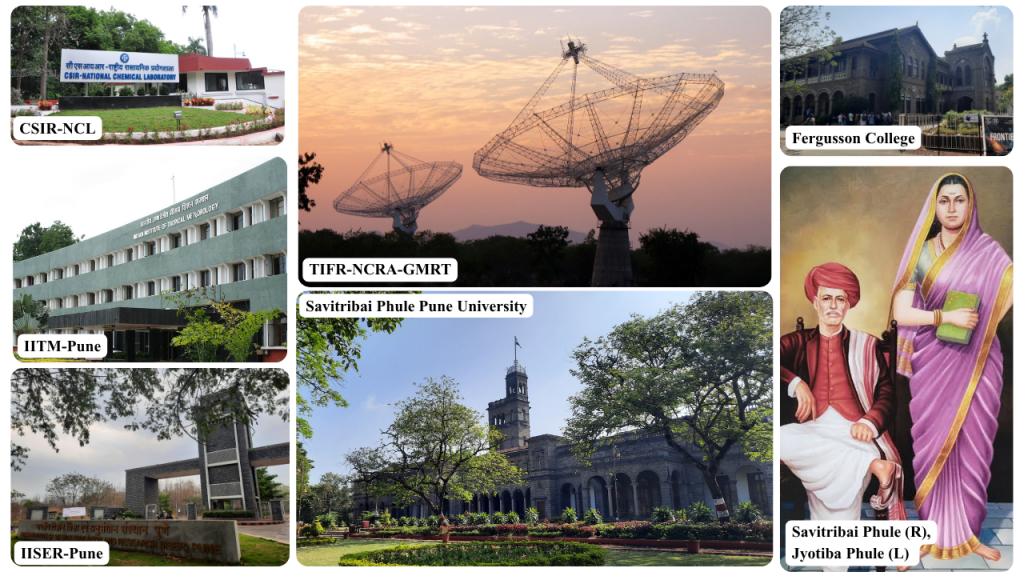
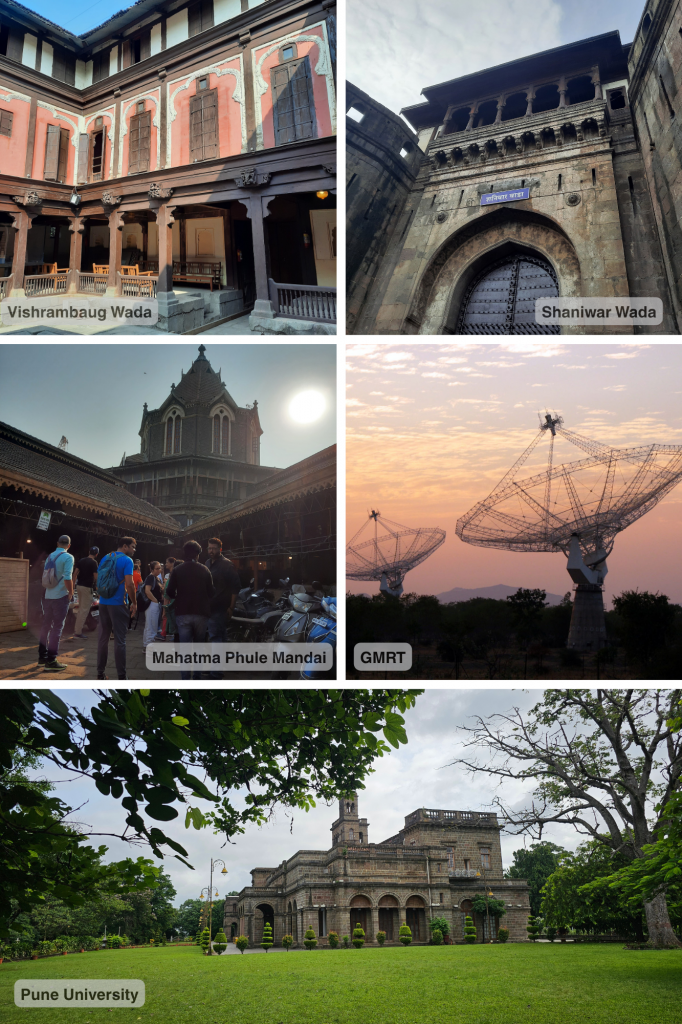
The city is also known as the Oxford of the East, for its significant impact on Science, Technology, and Education. The city is home to several academic and research institutions as well as astronomical facilities, such as:
- National Centre for Radio Astronomy (NCRA)
- Indian Institute of Science Education and Research (IISER)
- Giant Metre Radio Telescope
- IUCAA Girawali Observatory
- Fergusson College
- Savitribai Phule Pune University
Educational Reforms and Feminist Movement:
Pune has also played an important role in educational reforms and feminist movement in India. Some of the notable personalities who contributed to these are:
Savitribai Phule: The city is also home to revolutionary feminists Savitribai Phule, Sagunabai Kshirsagar & Jyotirao Phule, who fought for female education. Savitribai Phule became the first female-trained teacher in modern India and started the first girls' school in India. Within a few years, 9 female students and one school grew to 150 students across three schools in Pune. The University of Pune is also named after her as the Savitribai Phule Pune University.
Malati Bedekar: Malati Vishram Bedekar (1905–2001), born Balutai Khare, was a Marathi writer and social reformer regarded as one of the earliest feminist voices in modern Marathi literature. Writing under the pseudonym Vibhavari Shirurkar, she published Kalyanchi Nishwas (1933), a collection of short stories that addressed taboo subjects such as female desire, extramarital relationships, and the limitations placed on women in society.
Her early work sparked controversy for its open critique of social conventions, and she kept her identity anonymous until 1946. Bedekar later published Bali (1950), based on her observations of communities labeled “criminal tribes” under colonial law, as well as novels such as Shabari (1956) and Kharemaster, a fictionalized account of her father’s life.
She earned a doctorate in Sanskrit and worked as a teacher and administrator, balancing her academic career with literary activity. Bedekar was awarded the Maharashtra State Literary Award in 1964 and is widely recognized for her role in expanding the scope of women’s writing in Marathi.
Pune's Geoheritage
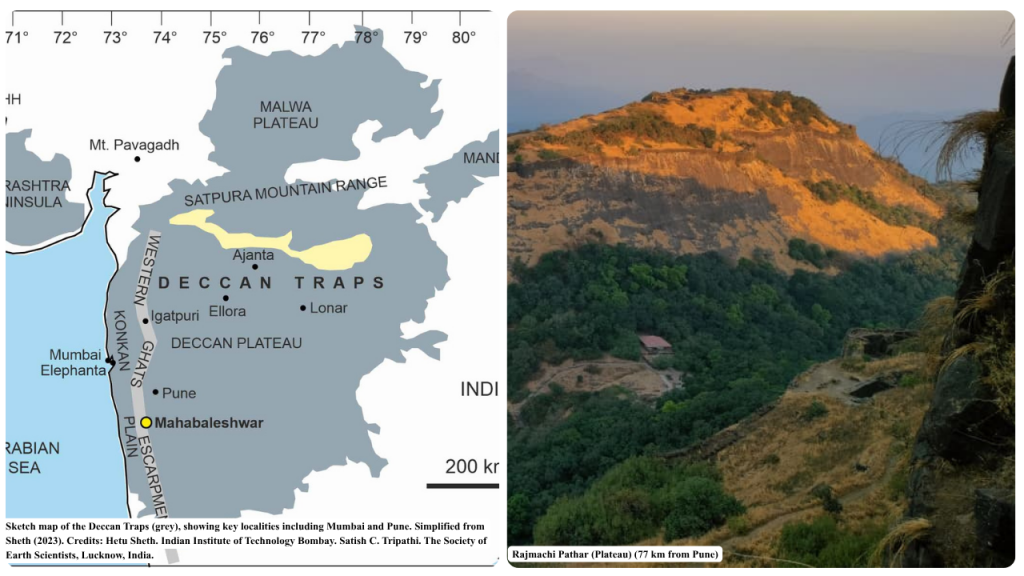
Geographically speaking, the district of Pune sits between the Sahayadri Mountain Range on the west and the dry, expansive Deccan Plateau on the east. The Sahayadris, also known as the Western Ghats, is a 1,600 km biodiversity hotspot running parallel to India’s western coast. The mountain range is famous for hiking and trekking activities. The Deccan Plateau is home to the famous geological formations of the Deccan Traps. Some scientists argue that this caused major climate changes during the late cretaceous period, leading to a significant loss in the dinosaur population globally. (Deccan Traps: American Museum of Natural History).
Pune's historical significance
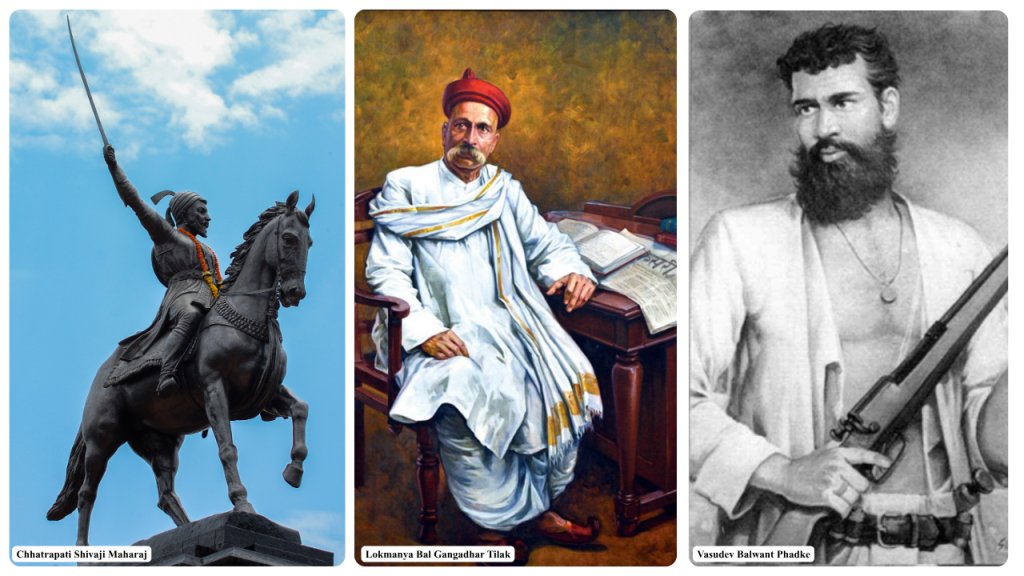
Historically, the city has been the capital of the Maratha Empire and the birthplace of the first Maratha ruler, Chhatrapati Shivaji Maharaj, who fought the war of independence against the Mughals and the Deccan Sultanates. Later the fight for India's independence was fought against the British rule in India. The city of Pune is also the hometown of the Indian freedom fighter, Lokmanya Bal Gangadhar Tilak, who organised Ganesh Pandals as a means of religious gatherings to spread the revolution for Hindavi Swarajya (Indian Self-Rule).
The palace of Lal-Mahal was build under Shahaji Bhonsale, father of the founder of the Maratha King. Jijabai, mother of Chhatrapati Shivaji Maharaj, is said to have commisioned the construction of the Kasba Ganpati Mandir, which also happens to be the Gram Daivat (prime village deity) of Pune. The cultural significance of the temple still reflects today, as it is considered as Pahila Manacha Ganpati (Most honoured Ganpati) during on-going Ganesh Chatturthi.
Short history of Savitribaibai Phule Pune Campus:
During the bubonic plague in India, the in-power British Government appointed Walter Charles Rand as plague commissioner of the city. The British, in general and Rand, in particular, were keen to eradicate the plague as quickly as possible as it adversely affected the commercial interests of the British. Rand misused his post and looted innocent Indians and humiliated women." Rand's efforts to control plague were tyrannical and brutal and reminded by many in Pune including Lokmanya Bal Gangadhar Tilak. Rand and his military escort Lt. Charles Egerton Ayerst were shot by Chapekar brothers on 22 June 1897. Ayerst died on the spot, while Rand died of his injuries on 3 July. The Assasination took place on the Ganeshkhind Road, near the campus.
Ganesh Chaturthi Utsav
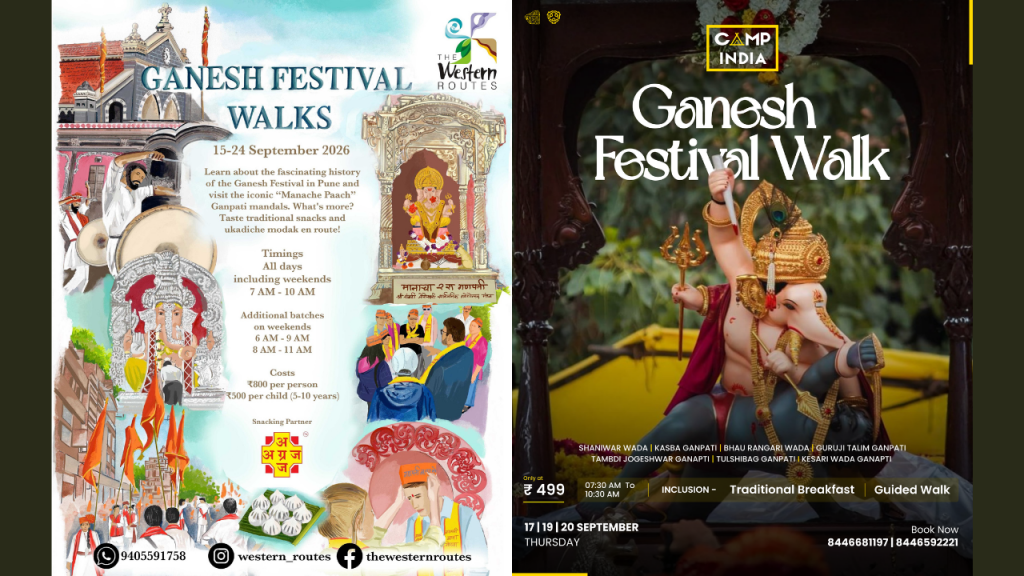
During our meeting Pune will experience its most beloved and anticipated Ganesh festival. Ganesh Chaturthi, the Hindu festival of Lord Ganesha is will be celebrated from 14th September to 25th September. The festival though celebrated all over India, has a unique culture in cities in Indian state of Maharashtra, mainly Mumbai and Pune. Ganesha's idols are beautifully decorated, and are bought home, or at pandals (public temporary structures) for blessings. During the festival, the prayers are offered to the Ganesh Idol along with Prasads (sweets). The sky in the city is filled with soft hymns and rhythmic beats of Dhol-Tasha.
Few upcoming events to experience Ganesh Utsav:
- Organised by The Western Routes: We will set out on foot and walk the bylanes of the old city, visit the _Manache Paanch_ Ganapati mandals and of course taste traditional snacks and ukadiche modak (Must try: Local sweet) en route. What's more? Our snacking partner Agraj will provide dry snacks to munch on while we walk! For more information and registration: https://myair.link/the-western-routes/ganesh-festival-walk
- Ganesh Festive Walk by Camp India: Shanivar Wada, Kasba Ganpati, Bhau Rangari Wada, Guruji Talim Ganpati, Tambadi Jogheshwari Ganpati, Tulshibaug Ganpati and Kesariwada Ganpati.
Pune and its Palladium of Arts
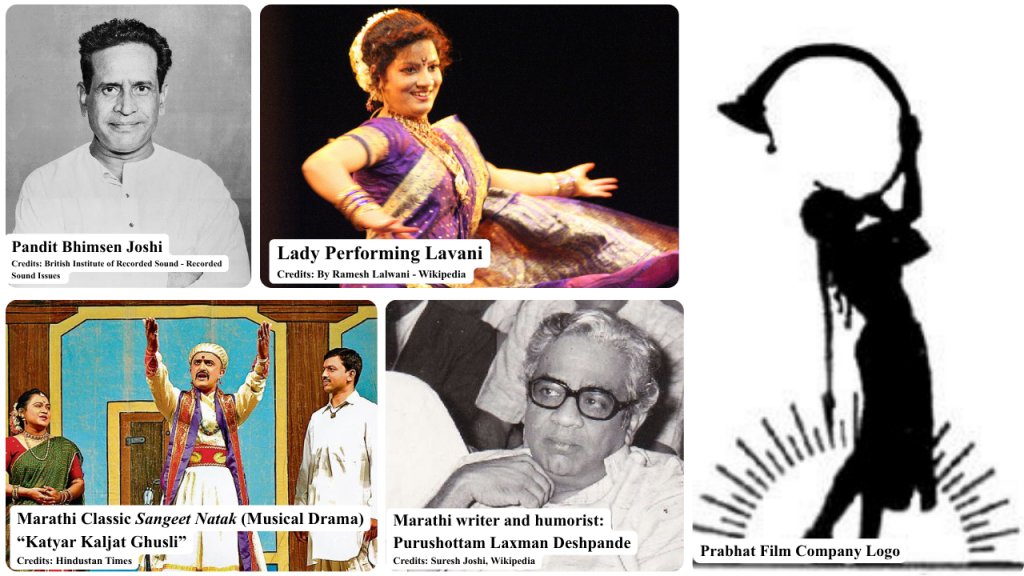
Pune sits at the heart of Marathi culture, and is often considered for its rich history in art forms including Music, Dance, Folk Tales, Theatre and Filmography.
Music:
- Ganesh Chaturthi Dhol-Tasha: In the hindu festival of Ganesh Chaturthi, people gather to commemorate the birth of Lord Ganesha, the air is filled with hymns, traditional music, and the beat of dhols (drums) and tasha (kettle drum) and is often paired with an energetic traditional dance which can only be experienced in Maharashtra.
- Sawai Gandharva Bhimsen Mahotsav: The classical music festival, honours the renowned classical musician late Pandit Bhimsen Joshi. The event takes place to highlight India's rich classical music heritage in India.
Plays and Theatre Culture:
Pune’s role as a hub for new ideas in theatre deepened over the 20th century. In 1951, the Progressive Dramatic Association (PDA) was founded, becoming a launchpad for experimental work by writers, directors, and performers who would go on to reshape Marathi theatre. By the 1980s and ’90s, Pune’s theatre space had widened even more. Dr. Mohan Agashe brought the German GRIPS model of children’s theatre to Maharashtra. Institutions like Lalit Kala Kendra (established in 1987 at Savitribai Phule Pune University) made full-time arts education more accessible. The early 2000s brought another shift. With the rise of Pune’s IT industry came a more diverse and multilingual audience, encouraging more productions in Hindi and English. Children’s theatre also entered schools.
Lavani (Dance):
Lavani is a dynamic folk performance tradition known for its powerful rhythm, expressive gestures, and bold storytelling. While it originated across Maharashtra, Pune has long served as one of its most important cultural centres - shaping its growth, patronage, and artistry over centuries. The dance is especially recognized for the nauvari sari worn by female performers, paired with vibrant jewellery and ghungroos (anklets), all of which enhance the visual and sonic impact of the performance.
Films:
In 1933, the city saw seting up of eminent Prabhat Film Company. Today, the former premises of Prabhat Film Company in Pune houses the Film and Television Institute of India (FTII). The site also features the Prabhat Museum, which showcases artifacts, original contracts, costumes, props, equipment, posters, and stills from the company's history. Prabhat Films produced 45 films in Marathi and Hindi. During the advent of talkies in India, Prabhat Films, along with Kolkata's New Theatres, stood out for its artistic achievements and socially relevant themes. Some of its notable productions include Kunku (released in Hindi as Duniya Na Mane), Swarajyacha Toran (also called Udaykal), based on the life of Shivaji, Dharmatma on Saint Eknath, Sant Tukaram on the eponymous saint-poet and social reformer, Shejari (released in Hindi as Padosi), addressing communal harmony, Manoos (also called Aadmi), tackling alcoholism, and Amar Jyoti, advocating women's emancipation.
Experience Pune
Make the most out of your visit! Here are few places to visit in and around Pune:
Places to visit:
| Shaniwar Wada and Lal Mahal | 8.5 km | Historical |
| Aga Khan Palace | 11.2 km | Historical |
| Sinhgad Fort | 35.8 km | Historical, Hiking, Nature |
| Khadakwasla Dam | 20.8 km | Nature, Cycle touring |
| Osho Garden | 9.9 km | Peaceful, Meditation |
| Vetal Tekdi | 11.2 km | Nature trail |
| Raja Dinkar Kelkar Museum | 10.2 km | |
| Katraj Snake Park | 14.6 km | Nature, Zoo |
| Dagdushet Ganpati Mandir | 6.6 km | Hindu Temple |
| Kasba Ganpati Mandir | 6.4 km | Hindu Temple |
| Ajanta Caves | ~400 km | Buddhist Rock cut caves |
| Elora Caves | ~300 km | Rock cut caves |
| Lonar Crater | ~450 km | meteorite impact crater and saline-alkaline lake |
| GMRT | ~82 km | Radio Telescope |
| IGO | ~80 km | Optical Telescope |
| LIGO-India | ~600 km | Upcoming GW detector |
- Heritage walks
Pune heritage walk
Food and culture trail
- Hiking
Sahyadri mountain hikes
Sources
- https://indiandistricts.in/cultures/maharashtra/pune/artforms/
- https://www.hindustantimes.com/pune-news/a-walk-down-the-memory-lane-with-bharat-natya-mandir/story-P4It3bAfk4Fdlpgyz3c1GJ.html
- https://www.incredibleindia.gov.in/en/maharashtra/pune
- https://maharashtratourism.gov.in/districts/pune/
- Deccan Traps